My Land Rover Discovery 3 has been the ultimate all purpose vehicle for me, everything from a luxury car to a capable overlander and everything in between. Let me show you how I have kited it out for overlanding. I also share one of the first trips we did with this new overlanding setup that lets me convert this everyday family SUV into the ultimate overland rig in less than an hour.

Buying a Land Rover Discovery 3
When I built my Series camper back in 1999 I never would have thought of overlanding in a Disco 3. But 20 years later things change and here I am. After only driving and overlanding in Series and Defender Land Rovers for over 20 years I sold my Defender 110 in 2013 and bought a 2009 Discovery 3. I was commuting a lot and driving the Defender every day in traffic for 140km, was just not practical. I needed something more comfortable for daily use but still capable of overlanding in.
So my plan with the Disco was still to be fully self-sufficient for overland travel but I didn’t want to make permanent changes and have excessive fittings on the interior or exterior of the vehicle. I wanted to keep it original and as is for daily life and then be able to transform it into an overlander quickly and easily for weekend or even longer camping trips.
First Overland Trip
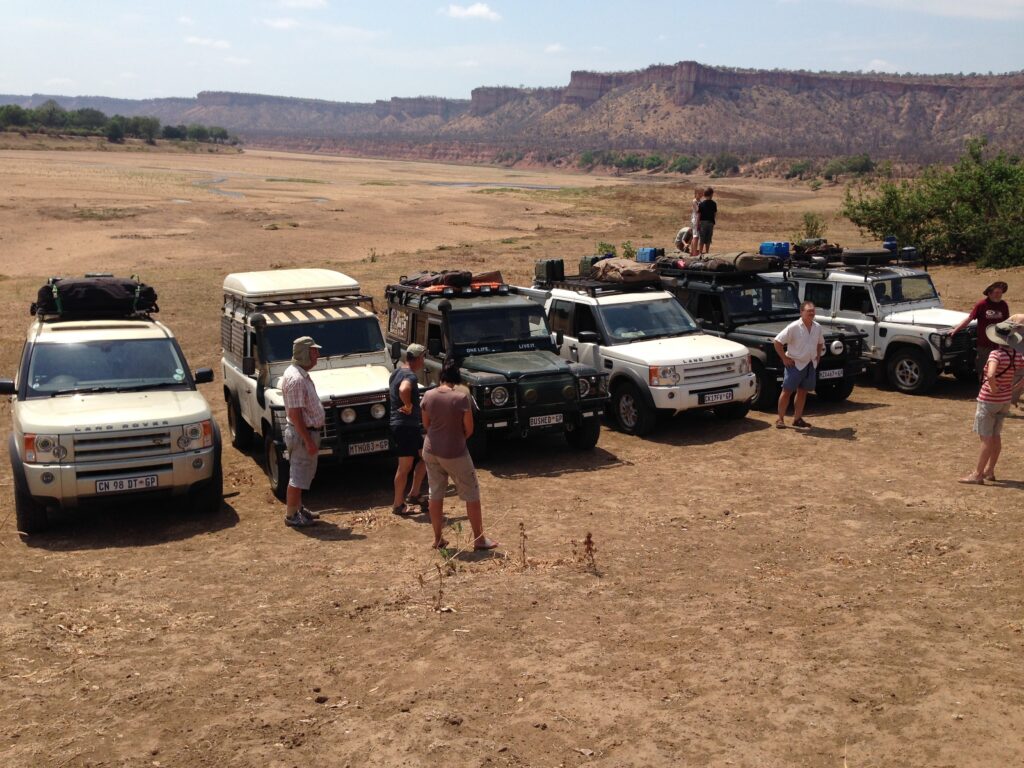
One of the first proper trips that I did in this vehicle with this overland setup was with the LROC and we went up to Gonarzhou via Pafuri in the Kruger National Park. We had to be fully self sufficient because there were no facilities in Gonarezhou.
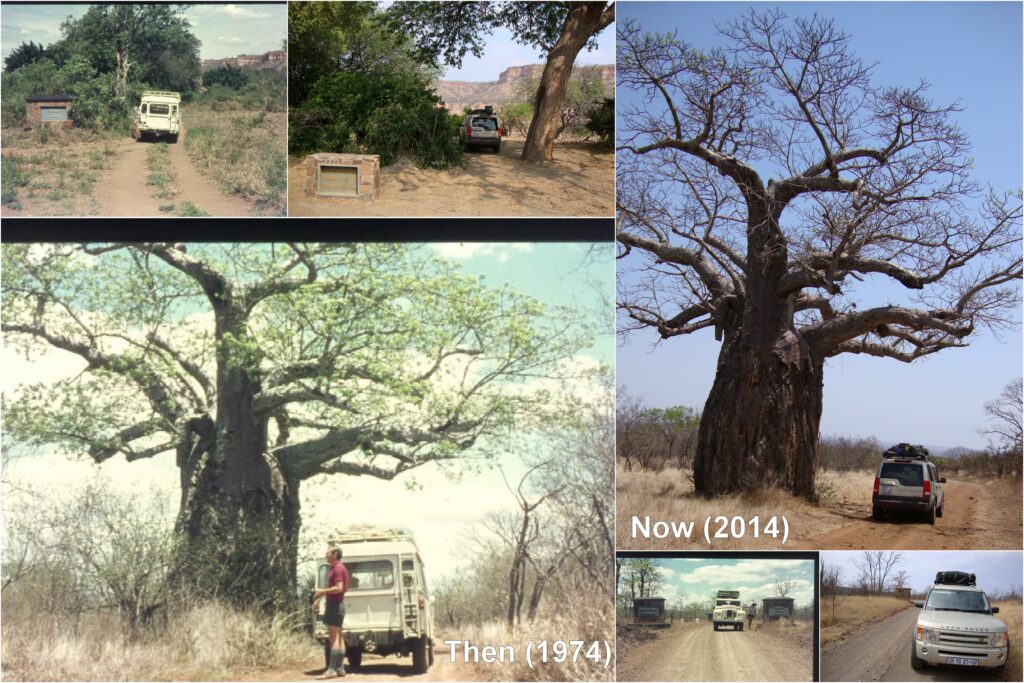
This trip was made even more special because it reminded me of one of the first trips that I had done with my parents to exactly the same location 40 years previously. At the time I was about 5 years old, which was the same age as my son was on this trip. Here we were taking a new vehicle, young family and new setup on the same trip but 40 years later. It was fantastic being able to re-visit the same spots and take some then and now pictures.
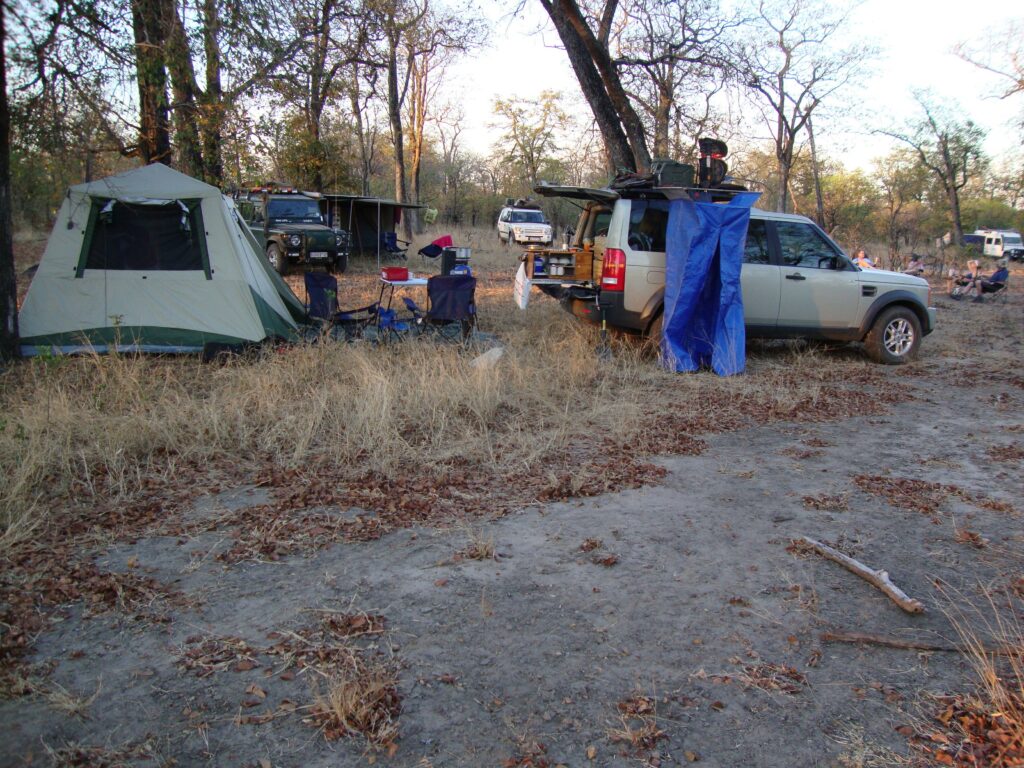
It turned out to be a such great trip with a great bunch of people in 4 Defenders and two Disco 3’s. Gonarezhou means “The place of Elephants” and forms part of the greater Limpopo transfrontier national park, a truly spectacular, wild and remote part of South Eastern Zimbabwe. Our vehicle was faultless and our overland setup worked very well.
Discovery 3 Overland Setup
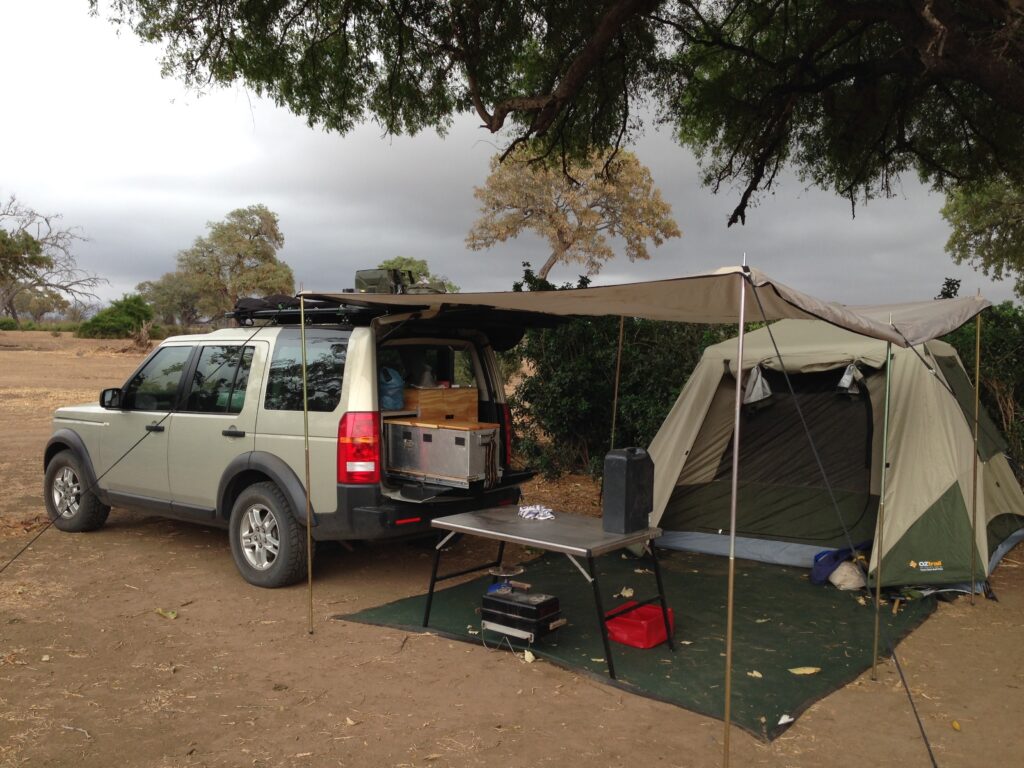
Firstly I wanted a roofrack fitted permanently so I needed one that was compact, low and unobtrusive but was still strong and could take all the normal fittings. I fitted the slimline roofrack from eezi awn. [roof rack close ups]
On this roofrack I have fittings for the spade, gas bottle and a jerry can holder for two jerry cans. Also on the roof I put either a roof bag or roof box that contains the tent and all the sleeping stuff. Also on the back I have a Front runner awning that ties onto the back of the roof rack. I can also fit a few other bulky light items like wood or roll up solar panels. My favorite part about this roofrack setup is that it fits a table in underneath that is well secured and easy to access.
Inside Camping Setup

Then on the inside the space is tight, as a family of 3 we just manage to fit in. For a couple it would be ideal but for a larger family of 4 or more you are going to need more space.
Several years ago I had build a dedicated Land Rover camper with built in bed, fridge, kitchen, shower, toilet water tank and lots of storage space. Then when I moved to the Defender 90 I downscaled quite a bit but kept the concept of a fridge, kitchen unit, built in water and storage space. Somy plan for the Disco was to keep a similar setup to what I had in the Defender.
The trick was I had to get everything to fit into the back and it couldn’t be permanent. So I decided to build a removable draw system that would provide easy accessibility to everything. I built it out of aluminium square tube to keep the weight down and use Maizey connect it system that allows you to build weld-free frames.
Then I use camo box storage for camp utilities. Heavy items like drinks go at bottom and lighter food items on top. Kitchen box was modified and fitted to drawer rails to pull out.
This square frame setup left an awkward gap behind the rear seats. But this was perfect to fit in the tapered water tank from pioneer plastics that is made to fit behind rear seats. With a pipe on this, water is easily tapped off at the back to the vehicle.
Fridge and Electrics
Normally you would fit the fridge in the back but I was trying to maximise packing space and because we didn’t need to use all 3 rear seats I decided to sacrifice a rear seat for the fridge. The Disco 3 has these really clever fold flat seats so it provides a level stable surface to fit the fridge. I made a simple wood platform vovered in carpet that protects the seat and stops the fridge from slipping and then used tiedowns to secure it to the seat base. I have used a 40l Engel fridge which fits in here perfectly .
To power the fridge and other electrics I had a auxillary battery fitted in the spare space under the bonnet together with a CTEK charger. For longer stays I used a solar panel to charge the batteries via the CTEK charger. I never had any flat battery issues on trips with this setup but I have not been happy with the CTEK.
Overland to Gonarezhou Zimbabwe
Travelling up from Pafuri to Mabuluata in Gonarezhou was all on jeep tracks. Many sections of the road were even washed away and clearly not being used often. This is where the ability of the Disco really impressed me. It navigated these dongas with ease and we had some pretty precarisous crossings too. But the vehicle was well balanced and easy to drive.
Even though the entire camp setup inside is not permanently fitted it is very securely tigthed. So even on the roughest of roads everything is secure and stays where it should. This is very important because on rough roads you cannot have stuff flying around getting broken or causing a driving hazard.
This southern part of the park was very remote and rugged and much less popular than the northern parts of Chilojo cliffs and Chipinda pools.
To get to the northern part of the park you criss cross the rivers via several demarcated causeways. On my last visit here in April 2001 the rivers were too full and it was not possible to use the causways. But this time we were travelling in October which is the end of the dry season which made it extremely hot but also meant that the rivers could be crossed easily. Each time we crossed a causeway it was great fun.
The last camp we stayed at was Chipinda pools which is located on the Rhunde river. The camps are beautiful and set along the banks of the river. This was where we had some more close encounters with the famous Gonarezhou elephants.
After 10 days of fully self suffient camping we made our way home via Beitbridge.
Quick and Easy Unpack
The best part about this overland setup is that it is quick and easy to unpack and convert the vehicle back into a daily driver. As soon as get home I can easly loosen all the fittings and remove the kitchen unit, storage boxes, drawer unit, water tank and the fridge. And then the Disco is back to normal. I hope you enjoyed that episode. If you have a Disco 3 let me know in the comments below, I’d love to know how you have used it for overlanding.
Checkout the full video on our YouTube channel The Overland Legend


